Food logistics has traditionally been optimised around volume — consolidating loads, maximising storage capacity, and moving large quantities efficiently. That foundation still matters. But heading into 2026, the industry is clearly evolving toward a more refined operational focus: velocity.
Velocity is not simply about moving freight faster. It is about designing logistics systems that deliver speed with consistency, predictability and control. Across ambient, chilled and frozen supply chains, this shift is already reshaping how high-performing operators structure their networks.
A more dynamic flow of goods
Customer demand patterns have become more dynamic. Retailers and producers are increasingly operating with tighter replenishment cycles, leaner inventories and higher expectations around delivery accuracy. In response, logistics providers are refining their operations to support more frequent movements without sacrificing reliability.
This requires a sharper focus on dwell time, handling efficiency and dispatch coordination. Product velocity through warehouses and distribution centres is now as important as total throughput. Faster, cleaner transitions between inbound, storage and outbound stages are delivering measurable gains across the supply chain.
Precision over pace
In food logistics, speed only delivers value when it is paired with certainty. Clear cut-off times, dependable delivery windows and disciplined execution are what allow customers to plan with confidence.
The strongest operators are prioritising precision over raw pace. Rather than chasing the fastest possible movement in isolation, they are building systems that perform consistently day in, day out. This approach reduces waste, protects product integrity and strengthens long-term partnerships.
Velocity as an end-to-end discipline
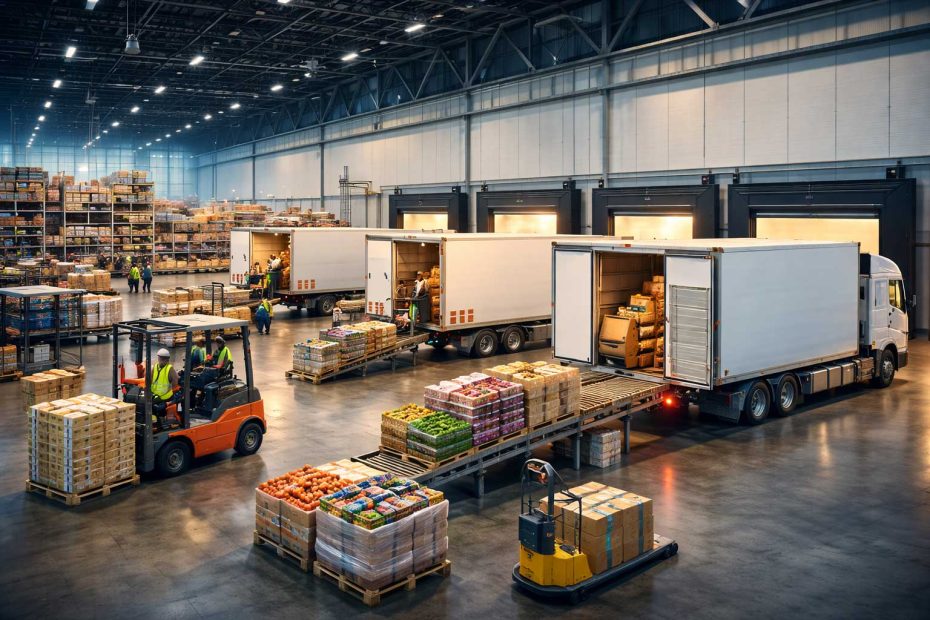
True velocity is achieved when every part of the operation is aligned. Transport is only one component. Booking processes, labour planning, staging, picking accuracy and dock management all play a role in maintaining momentum through the system.
Leading logistics providers are increasingly viewing velocity as an end-to-end discipline rather than a single asset or capability. Incremental improvements across multiple touchpoints often deliver greater gains than isolated investments in infrastructure alone.
Importantly, this approach also creates resilience. When pressure points emerge — whether through seasonal peaks or demand fluctuations — well-designed systems adapt without disruption.
A foundation for scalable growth
As the food sector continues to evolve, velocity is becoming a foundation for scalable growth. Faster, more predictable movement of goods supports better forecasting, more responsive replenishment and stronger service outcomes.
For logistics partners, this represents an opportunity to deliver greater value through operational excellence. For customers, it creates confidence that their supply chain can keep pace with changing market conditions.
Looking ahead to 2026
Volume will always remain a core metric in food logistics. But the industry’s next phase is being defined by how intelligently that volume moves.
Velocity — built on precision, consistency and system-wide alignment — is setting the standard for modern food logistics. Operators who invest in this approach are positioning themselves for stronger performance, deeper partnerships and sustainable growth in 2026 and beyond.
Looking for food storage warehousing? ACIT cold storage is the perfect way to store and transport your foods Australia wide.